Seeing the Northern Lights (Aurora Borealis) is a bucket-list dream for many. But here in the Finnish Lapland, the magic of the dancing lights often comes with bone-chilling temperatures, sometimes dropping to -20°C or even -30°C.
To enjoy the show without shivering, you need more than just a “warm coat.” At Private Snow Safaris, we want you to focus on the sky, not your frozen toes. Here is our expert guide on how to dress like a local for your Arctic adventure.
The Secret is in the Layers
The key to staying warm isn’t one thick garment; it’s multiple layers that trap air—the best natural insulator.
1. The Base Layer: Your Second Skin
The goal here is to keep moisture away from your skin.
- What to wear: Thermal long-sleeved top and leggings made of Merino wool.
- Pro Tip: Avoid cotton at all costs. Cotton absorbs sweat and turns cold and damp, which is a recipe for freezing.
2. The Mid Layer: The Insulator
This layer traps the heat your body produces.
- What to wear: A thick wool sweater or a fleece jacket. If it’s exceptionally cold, you can even add a light down vest or a second thinner wool layer.
- Pro Tip: Wool is the gold standard in Lapland because it stays warm even if it gets slightly damp.
3. The Outer Layer: Your Shield
This layer protects you from the wind and snow.
- What to wear: A high-quality, windproof, and waterproof winter parka and snow pants.
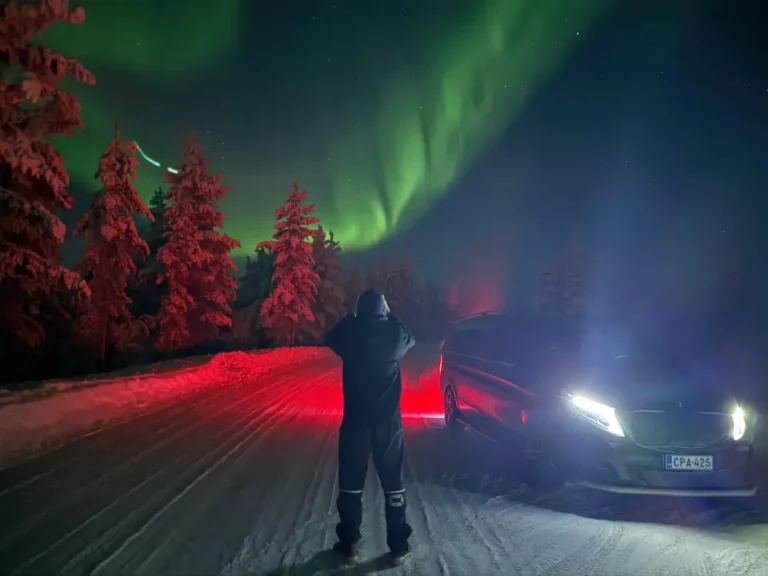
- Pro Tip: On our Private Snow Safaris tours, we often provide professional-grade thermal overalls to ensure you have the best protection possible.
Don’t Forget the Extremities
Your head, hands, and feet are where you lose heat the fastest.
- Feet: Use high-quality wool socks (one thin pair, one thick pair). Make sure your boots aren’t too tight—if there’s no room for air to circulate, your feet will get cold regardless of the socks.
- Hands: The “Liner + Mitten” combo is best. Wear thin silk or wool liners underneath thick, windproof mittens. Mittens are much warmer than gloves because your fingers share heat.
- Head & Neck: A warm beanie that covers your ears is a must. A neck gaiter or “buff” is better than a traditional scarf, as it won’t unravel and keeps the wind out of your jacket’s collar.
Why “Waiting” for Auroras is Different
Unlike skiing or hiking, Aurora hunting involves standing still for long periods while looking at the sky. When you aren’t moving, your body doesn’t produce as much heat.
Extra Tips for the Hunt:
- Chemical Heat Packs: Hand and toe warmers are small lifesavers during a long night in the wilderness.
- Stay Hydrated: Drink something warm (we love serving hot berry juice!).
- Move your toes: Even if you are standing still, wiggle your toes and fingers constantly to keep the blood flowing.
Ready for the Adventure?
At Private Snow Safaris, we take care of the logistics and the safety so you can focus on the wonder of the Arctic night. Our private tours are designed to be comfortable, professional, and unforgettable.
At Private Snow Safaris, we keep things exclusive. If you book our Private Aurora Hunting tour, the premium vehicle is completely reserved for you and your own group (maximum 7 persons), guaranteeing an experience tailored entirely to your pace. Alternatively, our standard Aurora Hunting is a shared experience where other guests may join (total maximum 7 persons, with a minimum of 2 persons required for the tour to operate).
Are you ready to see the lights?
Book your private Northern Lights safari here!
Private Aurora Hunting: https://privatesnowsafaris.com/product/private-aurora-hunting
Standard Aurora Hunting: https://privatesnowsafaris.com/aurora-hunting-2