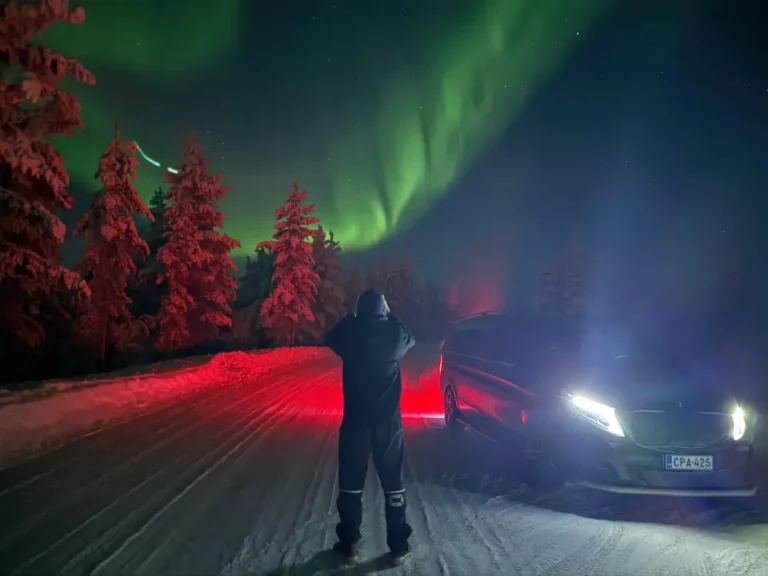
The Northern Lights, or Aurora Borealis, are perhaps the most breathtaking natural phenomena on Earth. While they look like magic, they are actually the result of a complex and fascinating interaction between the Sun and our planet.
If you’ve noticed more talk about auroras lately, you aren’t imagining it. We are currently in a very special period of solar activity. Here is everything you need to know about the science behind the glow and why now is the best time to look up.
The Heartbeat of the Sun: The 11-Year Solar Cycle
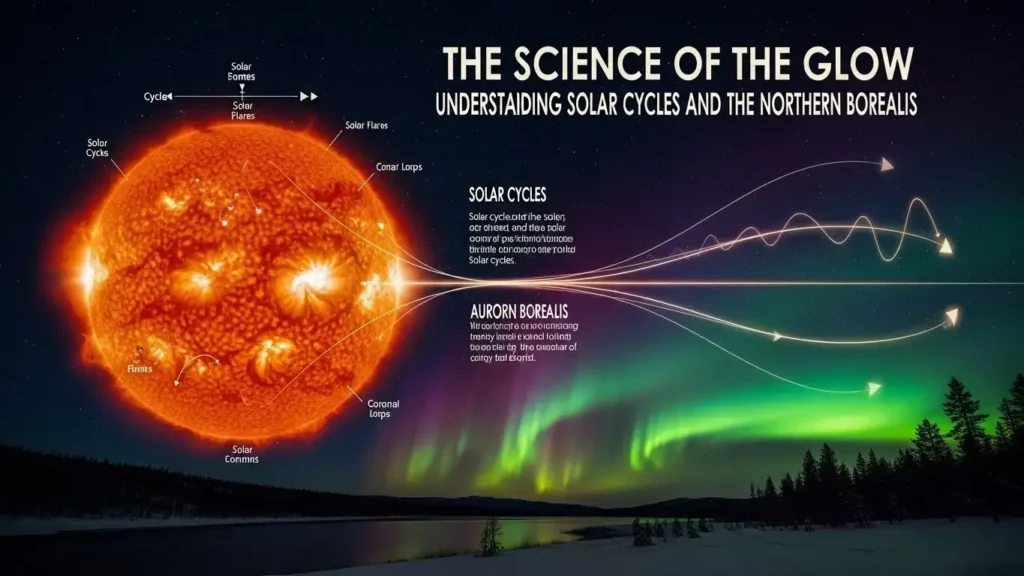
The Sun does not remain constant; it follows a repeating rhythm known as the Solar Cycle, which lasts approximately 11 years. During this cycle, the Sun’s magnetic field completely flips.
- Solar Minimum: This is the quiet phase of the cycle. Sunspots are rare, and solar eruptions are infrequent, meaning Northern Lights displays are mostly confined to the far North.
- Solar Maximum: This is the peak of the cycle. The Sun becomes peppered with sunspots and frequently erupts with solar flares and Coronal Mass Ejections (CMEs). These eruptions send massive clouds of charged particles hurtling through space.
Why It Matters Right Now
We are currently in the Solar Maximum of Solar Cycle 25. This is fantastic news for aurora hunters! During this phase, auroras are not only more frequent and vibrant, but they can also be seen much further south than usual—sometimes reaching Central Europe or the Mid-United States.
The Secret of the Seasons: Why March and September?
You might think that the coldest winter nights are the best for auroras, but science suggests otherwise. Auroras actually have a seasonal rhythm.
Statistical data shows that geomagnetic storms are most frequent around the spring and autumn equinoxes (late March and late September). This is due to the “Russell-McPherron effect.” During the equinoxes, the tilt of Earth’s magnetic pole aligns with the solar wind in a way that creates “cracks” in our magnetic shield, making it much easier for solar particles to pour into our atmosphere.
How Are the Northern Lights Actually Formed?
To understand the Aurora, you have to imagine a cosmic game of pinball. Here is the step-by-step breakdown:
- The Solar Wind: The Sun is constantly streaming electrically charged particles (protons and electrons) into space. This is called the solar wind.
- The Magnetic Shield: Earth is like a giant bar magnet. Our magnetic field (the magnetosphere) acts as a shield, protecting us from most of these particles.
- The Funnel Effect: The magnetic field lines funnel the solar particles toward the North and South Poles.
- The Collision: As these particles enter our atmosphere, they smash into gas atoms—mostly oxygen and nitrogen.
- The Light Show: These collisions “excite” the gases, causing them to release energy in the form of light. It’s the exact same process that happens inside a neon sign!
🏔️ Top Tips for a Successful Aurora Hunt
Seeing the lights requires more than just being in the right place; you need a strategy. Here are our pro tips for maximizing your chances:
1. Escape the City Lights
Light pollution is the enemy of the aurora. Even a strong display can look faint if you are standing under a streetlamp. Head out to the countryside, a dark beach, or a forest clearing. The darker your surroundings, the more colors you will see.
2. Monitor the “Kp-Index”
The Kp-index is a scale from 0 to 9 that measures geomagnetic activity.
- Kp 1-3: Great for Lapland and Northern Norway.
- Kp 5 or higher: This is a “Solar Storm.” If this happens, start looking at the sky even if you are in Southern Finland or the Northern US!
- App Tip: Download an app like “My Aurora Forecast” or follow the Ilmatieteen laitos (FMI) alerts.
3. Check the Cloud Forecast
This is the most important tip: You cannot see the Northern Lights through clouds. Even if the solar activity is at a maximum, a cloudy sky will block the view. Always check local weather maps for “clear sky” pockets.
4. Be Patient (and Stay Late)
Auroras are unpredictable. They can pulse for 10 minutes, disappear, and then come back even stronger an hour later. The best window is usually between 9:00 PM and 1:00 AM. Dress in warm layers so you can stay outside comfortably for long periods.
5. Use a Tripod for Photos
If you want to capture the lights on camera, your phone or DSLR needs a steady base. Because the lights are faint, you need a “long exposure” (2–10 seconds). Without a tripod, your photos will be blurry.
- Phone Tip: Use “Night Mode” and hold the phone as still as possible, or better yet, use a mobile tripod.
Summary: Nature’s Electric Greeting
Essentially, the Northern Lights are the Sun’s way of saying “hello” to Earth’s atmosphere. We are currently in the most active part of the solar cycle, and with the equinoxes approaching, there has never been a better time to head north and witness this electric dance for yourself.